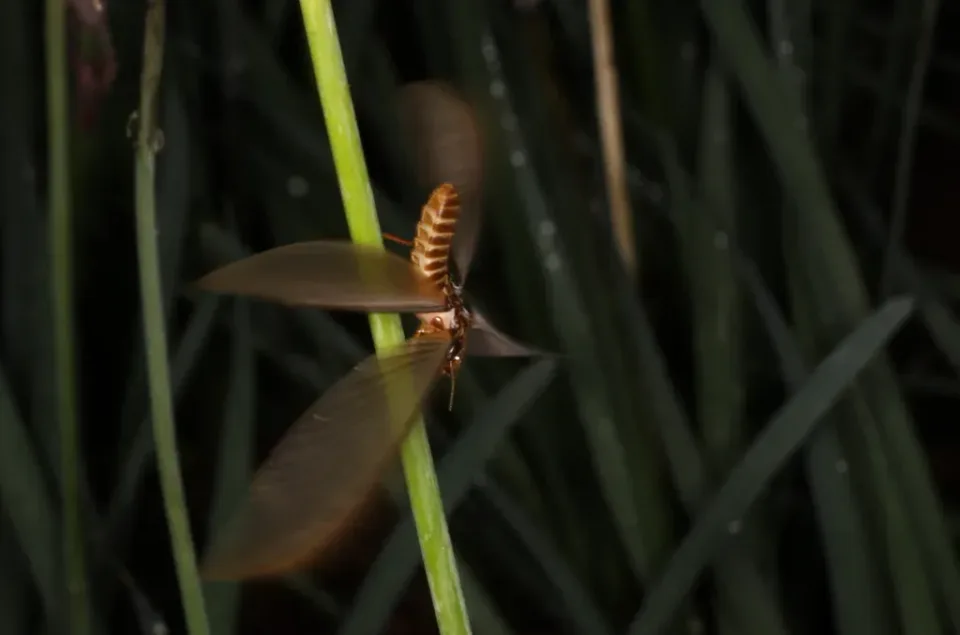
Are Termite Tubes or Swarmers a Warning Sign?
ants trailing across kitchen counters
cockroaches appearing after dark
mice scratching inside bedroom walls
bed bug bites after sleeping
termites leaving wings near windows
mosquitoes breeding around standing water
What does a termite mud tube look like?
A mud tube is a narrow, soil-colored shelter running over a foundation, masonry, or another exposed surface. Termites use it as a protected route between the ground and wood; a tube is a reason to investigate, not proof by itself that termites are currently feeding inside your home.
Do not break it open just to see what is inside. Photograph its length and location, then check nearby wood for damage without pulling apart trim or flooring.
In Delaware homes, we pay attention to where a tube meets the structure and whether it appears intact, recently disturbed, or dry and old. A common mistake is to remove the visible tube before documenting it. That can erase useful evidence while leaving the underlying question unanswered. We inspect the surrounding area and explain what we can verify.
Do wings near a window mean termites?
Discarded wings may be from termite swarmers, but other insects can leave wings too. Look for many similar wings gathered near a window, door, or light, and note whether you also see live winged insects. Do not rely on wing color or a single specimen to make the identification; save a few in a small container or take a close photograph for inspection.
Delaware Park is a familiar local reference, but outdoor surroundings alone cannot establish that a home has termites. A swarm near a building is more useful when considered alongside indoor evidence and the structure’s condition.
The Delaware State Capitol is another reminder that buildings differ in age and construction; inspection needs to follow the actual property, not a one-size checklist. Our crew records the location of wings and checks nearby openings and wood before discussing treatment.
When should you call instead of handling it yourself?
If you find an intact tube, repeated wing piles, or suspected damage inside a wall or floor, arrange a professional inspection rather than spraying the visible area. A surface application may miss concealed activity, and disturbing the evidence can make it harder to determine what is happening. That is the practical DIY boundary: photograph and observe, but leave investigation of concealed areas and treatment decisions to a qualified professional.
Fall cooling drives rodents indoors for shelter, so noises or other signs around a house in autumn should not automatically be attributed to termites. Identify the pest before choosing a response.
Freeze-thaw cycles can widen cracks in masonry, making foundation checks especially useful after winter; note cracks near any tube, but do not assume a crack proves termite activity. We inspect the evidence and explain the limits of what is visible.
What does a Delaware termite inspection establish?
An inspection helps distinguish a current concern from an old or misidentified sign by connecting what is found outside with the accessible areas inside. Clear access to relevant rooms, basement, attic, or crawlspace can help us examine the property without guessing. Do not conceal a tube with paint or patching before the visit; retain photographs and tell the inspector when you first noticed the clue.
Delaware Route 1 runs through places with different building types and site conditions, so a treatment plan should follow the specific structure rather than the route or town name. First State Heritage Park gives residents a visible connection to Delaware’s history; older materials and later additions alike deserve an inspection tailored to what is actually present.
We explain findings, outline the proposed scope, and discuss follow-up where needed. For more signs to compare, see our termite warning-sign guide.
Which Termite Signs Deserve an Inspection?
A tube, a cluster of wings, and an isolated insect do not carry the same weight; the right next step depends on the evidence and where you found it. Around U.S.
Route 13, homeowners can use the same basic approach as anywhere else: document the sign and have the structure assessed, rather than assuming the location confirms the pest. Bombay Hook National Wildlife Refuge is a useful local landmark, but nearby natural areas do not diagnose a home infestation.
At Brandywine Creek State Park, changing outdoor conditions are part of the setting, not a substitute for examining the building.
| Option | Best for | Key detail |
|---|---|---|
| Photograph and monitor | One uncertain clue | Record the exact location and date |
| Professional inspection | Tubes, repeated wings, or suspected damage | Checks accessible areas and identifies evidence |
| Termite treatment plan | Activity confirmed by inspection | Scope depends on the structure and treatment system |
How to Prepare for a Termite Inspection
Start with a clear record. Take a close photograph of the tube or wings, then a wider image showing where the sign sits on the building; do not scrape it away before inspection.
Delaware has a humid continental climate with coastal moderation, so conditions can differ across the state; note recent wet weather or flooding if the area around the sign has changed. A home near Indian River Inlet may face different exposure than a property near Dover Green, so describe the actual site rather than assuming one local pattern applies everywhere.
Keep pets and children away from suspected treatment areas until the inspector gives instructions. Provide access to the basement, attic, or crawlspace if signs point there.
Bring your notes, including when the evidence appeared. Leave repairs and pesticide application until the finding and scope are clear.
When Should Delaware Homeowners Request a Termite Check?
A mud tube or shed wings deserves a closer look, especially if you find repeated signs or suspect damage near wood. Do not cover the evidence before it is documented.
In coastal areas, nor’easters can damage siding and rooflines, so after a storm inspect exterior surfaces from a safe position and note any new openings; that weather damage is not itself proof of termites. Cape Henlopen State Park and Downtown Newark are distinct Delaware landmarks, but wherever you live, the useful next step is a property-specific inspection.
We’ll explain what we find and what, if anything, calls for treatment. Contact Delaware Pest Solutions at (877) 729-2528 or review our Termite Treatment service to arrange an inspection.